Is your website ready to be read by a machine, not just a human? As of 2026, the exponential rise of AI Overviews (formerly SGE) has fundamentally shifted the organic search landscape. Nearly 20% of traditional informational traffic has already migrated toward synthetic, AI-generated answers. If your site's architecture isn't semantically perfect, your authority is vanishing into the void of failed retrieval. The goal of SEO has evolved: it’s no longer just about ranking in a list—it's about being the cited source of truth that LLMs (Large Language Models) trust to build their answers.
To survive and thrive in this new era, brands must transition from Generative Engine Optimization (GEO). This isn’t a minor tweak; it’s a foundational redesign of how information is structured and delivered. AI agents like Google Gemini, OpenAI’s GPTBot, and Claude are looking for "Information Gain"—original, verifiable data that adds unique value beyond the AI’s existing training set. Laudits.com provides the specialized diagnostics to ensure your infrastructure is AI-ready, validating your semantic mapping and ensuring your site architecture is optimized for the speed and clarity required by generative search engines.
From Keywords to Entities: The New Hierarchy of Search
For twenty years, SEO was built on the Keyword. In 2026, the Keyword is merely a signal; the Entity is the currency. An entity is a singular, well-defined concept—a person, a place, a product, or a specific technical idea. When an AI model generates an overview, it doesn't just look for matching words; it attempts to map the relationships between these entities. If your site doesn't explicitly define these relationships, the AI will likely ignore your content in favor of a competitor who does.
This shift requires a move toward Semantic Site Architecture. Your website must function as a Knowledge Graph, not just a collection of pages. Every piece of content should be connected to a broader ontological structure, showing how one topic leads to another. Laudits helps you identify "entity gaps"—areas where your site architecture fails to provide the machine-readable context necessary for AI bots to understand your full authority. By closing these gaps, you ensure that your site becomes a primary node in the global knowledge web that AI models crawl daily.
Why Semantic Architecture is the New Robots.txt
In the past, the `robots.txt` file was your primary tool for bot governance. Today, while still important, it is the semantic structure of your metadata that dictates how AI agents interact with your site. If your JSON-LD is messy or your entity mapping is inconsistent, AI crawlers will score your site low on "Retrieval Relevance." This means that even if you have the best article on a topic, it won't be cited in the AI Overview because the bot couldn't confidently verify the authorship or the relationship between the premises. High-quality semantic architecture is now the gatekeeper of your organic visibility.
Generative Engine Optimization (GEO): The Technical Pillars
GEO is the tactical application of SEO principles to the generative search environment. It focuses on making your content easily extractable and highly citable. Unlike traditional SEO, which often prioritized long-form storytelling to keep users on the page, GEO prioritizes information density and machine-readability. To excel in GEO, you must optimize for three specific technical pillars: Structural Clarity, Information Gain, and Verifiable Authority.
Structural Clarity is achieved through the aggressive use of nested Schema.org markup. It’s no longer enough to have a basic "Article" tag. You need to use `mainEntity`, `knowsAbout`, and `mentions` fields to map every claim to a specific, verified entity. Laudits.com includes a specialized Structured Data Validator that analyzes your code through the lens of an LLM, ensuring that your entity relationships are clear and syntactically perfect. When an AI agent hits your page, it should be able to parse your entire argument in milliseconds.
Structured Data Validation: Going Beyond Basic JSON-LD
Many sites use automated plugins to generate schema, resulting in "shallow" metadata. For AI Overviews, focus should be on "Deep Schema." This involves linking your content to external Knowledge Bases like Wikidata or industry-specific ontologies. It also means properly attributing content to authoritative "Person" entities who have a verified track record in that specific field. Laudits checks these external references for you, ensuring that your semantic signals are not just present, but also authoritative and verifiable.
Information Gain: The Content That AI Loves to Cite
AI models are trained on the "average" of human knowledge. To be cited as a source, your content must offer something the AI doesn't already know or can't easily synthesize from other sources. This is concept of Information Gain. Google’s algorithms in 2026 heavily favor content that brings new data, first-hand experience, or a unique expert perspective to the table. Generic content—or AI-generated content that merely regurgitates existing information—is increasingly ignored by AI Overviews.
To maximize Information Gain, your content strategy should focus on original research, primary case studies, and contrarian expert analysis. From a technical standpoint, this means ensuring that your unique data points are formatted in machine-readable tables and lists that AI agents can easily ingest. Laudits identifies content blocks that lack clear formatting for retrieval, allowing you to optimize your most valuable insights for maximum citation potential. If you have the data, make sure the machine knows how to find it.
Performance and INP: The Reaction Speed Required by AI
You might wonder why performance matters for AI retrieval. The answer lies in "Crawl Host Load." Generative engines crawl the web at a massive scale and with extreme urgency to keep their models fresh. If your site is slow, or if heavy JavaScript causes high Interaction to Next Paint (INP) latency, you are increasing the "computational cost" for the AI bot to process your page. In a world of infinite information, AI models will prioritize fast, lean, and responsive sites that provide maximum information for minimum computational effort.
Diagnosing AI-Readiness with Laudits
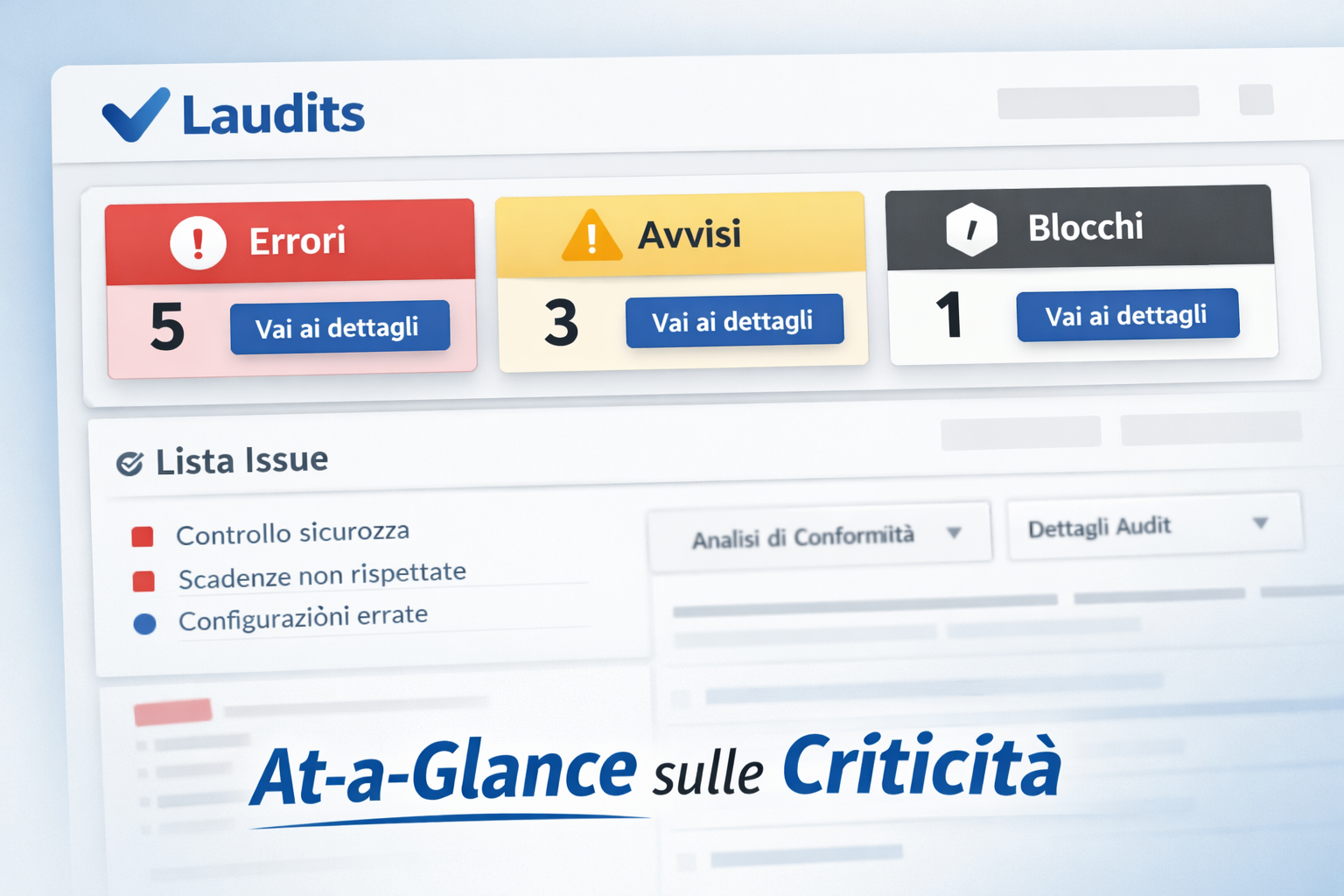
How do you know if your site is actually ready for the AI era? Traditional SEO tools are often lagging behind. Laudits.com has been redesigned from the ground up to handle the "Visibility Governance" requirements of 2026. Our diagnostic engine includes a specialized "AI-Readiness Score" that evaluates your site across multiple retrieval-focused metrics.
By using the Laudits AI Crawler Simulator, you can see your site exactly as an LLM retrieval agent would. We identify:
- Broken Entity Paths: Where context is lost between pages.
- Schema Ambiguity: Where nested data is confusing for a machine parser.
- Retrieval Latency: Technical bottlenecks that slow down AI bot ingestion.
- Information Density Gaps: Sections of your site that are too "fluffy" for AI summarization.
This level of technical transparency is vital for any brand that wants to maintain its share of voice in a generative search world.
The "Answer Capsule" Strategy: Formatting for Citations
To increase your chances of being featured in AI Overviews, every article should includes:
- The Summary Capsule: A 40-60 word direct answer to the primary query at the very beginning of the section.
- Entity-First Subheadings: Use H2s and H3s that explicitly mention the core entity.
- Machine-Readable Tables: Use HTML tables for all data comparisons (no images of tables).
- Speakable Schema: Use the `speakable` property for sections that act as definitive answers.
- Verified Author Entities: Link authors to their professional Knowledge Graph profiles.
- Fact-Density: Aim for at least one verifiable fact or original data point per 150 words.
- Relationship Markup: Use JSON-LD to link "what this is" to "why it matters" and "who says so."
Future-Proofing Your Visibility Governance
The transition to AI-driven search is not a temporary trend; it is the permanent destruction of the old SEO paradigm. Brands that continue to optimize for 2016-era ranking factors will find themselves invisible in a 2026-era search environment. Visibility Governance is the only sustainable strategy: a commitment to technical excellence, semantic depth, and operational efficiency.
Check your AI-Readiness